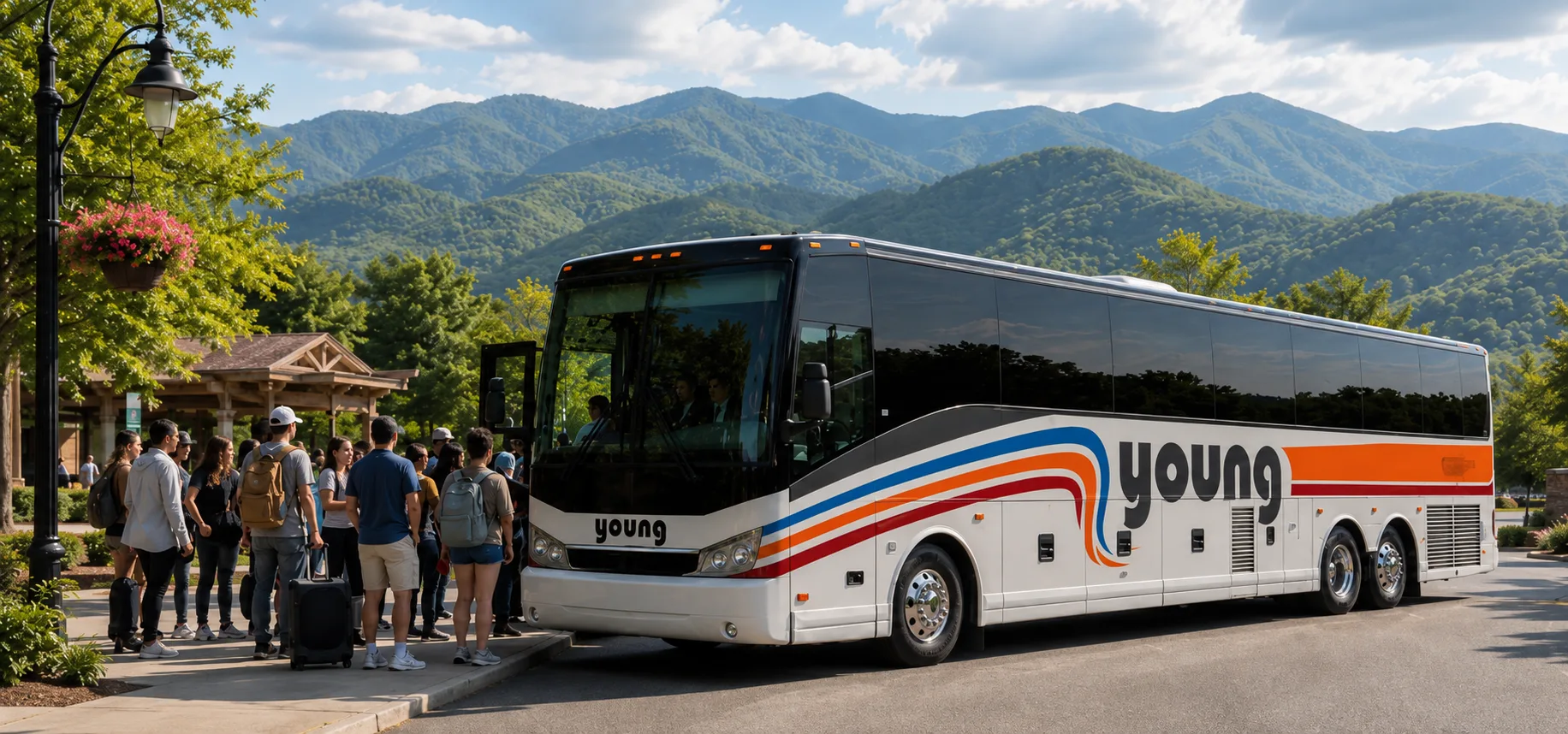

Renting a charter bus for the first time can feel more complicated than it needs to be. You know you have a group to move — the details are where things get fuzzy.
A charter bus is a large passenger vehicle rented exclusively by one group for a specific trip or event. Unlike public transit, you control the route, schedule, and stops. Most hold 40–56 passengers. Charter buses (also called motorcoaches) are commonly used for school trips, corporate travel, sports teams, weddings, church groups, and reunions.
This guide covers what a charter bus actually is, how it compares to other types of buses, when it makes sense to use one, and how the booking process works from first call to departure day.
Key Takeaways
- A charter bus is a privately rented vehicle — your group has it exclusively for your trip.
- Motorcoaches are the large full-size option (40–56 seats); activity buses and minibuses serve smaller groups.
- Charter buses are appropriate for groups of roughly 20 or more passengers traveling together.
- A good transportation company will ask the right questions and help you choose the right vehicle — you shouldn’t need to figure out the specs on your own.
What Is a Charter Bus?
A charter bus — often called a motorcoach — is a large passenger vehicle rented exclusively by one group for a specific trip. The word “charter” just means you’re reserving the whole vehicle, not sharing it with strangers the way you would on a city bus or a commercial Greyhound route.
When you charter a bus, you control the itinerary. The driver goes where you need to go, on the schedule you’ve planned. There are no other passengers, no pre-set stops, and no public timetable to work around.
Full-size motorcoaches typically seat between 40 and 56 passengers. They’re built for longer travel — most have reclining seats, climate control, overhead storage, and under-coach luggage compartments. Many include restrooms, power outlets, and Wi-Fi, though amenities vary by vehicle and company.
For smaller groups, activity buses and minibuses fill the gap between a full motorcoach and a passenger van. Choosing the right size depends on your headcount, the distance you’re traveling, and how much luggage or equipment you’re moving. We cover the full breakdown in Charter Bus Sizes Explained, but if you’re unsure where to start, our fleet page walks through each vehicle by passenger count and use case.
Charter Bus vs. School Bus vs. Shuttle Bus
People use these terms interchangeably, but they describe very different vehicles built for very different purposes. Here’s a straightforward comparison:
| Feature | Charter Bus / Motorcoach | School Bus | Shuttle Bus |
| Typical capacity | 40-56 passengers | 48-72 passengers | 12-30 passengers |
| Seat style | Reclining, padded | Bench seating | Forward-facing, fixed |
| Luggage Storage | Under-coach bays + overhead | Minimal | Minimal |
| Restroom | Often included | No | No |
| Trip type | Long-distance, events, group travel | Daily school routes | Short, repetitive transfers |
| Who controls the route? | You do | Pre-set route | Pre-set route |
| Rental availability | Yes — private charter | Limited | Often private |
| Comfort level | Coach/highway comfort | Basic | Basic |
The biggest practical difference: a motorcoach is designed for highway travel and passenger comfort over distance. A school bus is built for short, repeated daily routes. A shuttle bus handles high-frequency point-to-point transfers — airport pickups, hotel loops, parking lot relays.
For most group trips involving any real distance, a motorcoach or activity bus is the right tool. If you’re moving a large group on a tight loop between two nearby points — a convention center, a corporate campus, a parking structure — a shuttle configuration makes more sense.
Young Transportation operates motorcoaches, activity buses, and luxury vans, which means we can match the right vehicle to what you’re actually doing. See our full fleet here.
When Should You Rent a Charter Bus?
The short answer: any time you have a group that needs to arrive together, stay together, or move reliably between locations.
School and field trips. School administrators use charter buses when trip distance or group size moves beyond what district buses handle. Charter carriers operate under commercial passenger carrier regulations and carry appropriate insurance and licensing — important factors when moving students. Young Transportation’s school transportation services are built around the logistics of student travel.
Youth sports and athletic travel. Coaches deal with tight schedules and a lot of gear. A motorcoach keeps the team together and handles equipment without the coordination headache of a caravan. Our sports transportation services are set up for exactly that.
Corporate travel and events. Moving employees between offices, shuttling teams to off-site meetings, coordinating airport pickups for speakers or executives — these run cleaner with a dedicated vehicle and professional driver. Corporate transportation is one of the most common charter use cases, and the timing is usually non-negotiable.
Church groups and faith communities. Retreats, mission trips, and conference travel work well on a charter bus. The group departs together, travels together, and returns together — no fragmented carpools, no one arriving late.
Weddings. Charter buses move guests between venues: hotel to ceremony, ceremony to reception, back again at the end of the night. It removes the parking problem and the coordination chaos of telling 80 people to figure it out on their own. See our fleet for your special day.
Summer camps, youth retreats, outdoor programs, and group outings. Any situation where keeping campers, counselors, and staff together—on schedule and safely supervised—is more valuable than coordinating multiple vehicles. Explore Camp & Youth Transportation.
How Does Charter Bus Rental Work?
The process is more straightforward than most people expect.
Step 1: Gather your trip details
Before reaching out, pull together a rough picture of your trip:
- Approximate passenger count (doesn’t need to be exact, but the range matters)
- Trip date and departure time
- Pickup location and destination(s)
- How many hours or days you need the vehicle
- Any special requirements — luggage volume, equipment, accessibility needs, multiple stops
You don’t need every detail locked in before you call. That’s what the conversation is for. But the clearer your starting point, the faster you get an accurate quote back.
Step 2: Request a quote
Contact the transportation company and share what you’ve gathered. A reputable company will ask follow-up questions: Are you returning the same day? Do you have stops along the way? Is this recurring or a one-time trip? Those questions matter because they affect vehicle choice and final pricing.
Request a quote from Young Transportation here. We typically respond within one business day, with no obligation.
Step 3: Review the proposal
You’ll receive a quote that outlines the vehicle, pricing structure, and trip details. Read it carefully — understand what’s included and what might be additional (tolls, overnight driver accommodations for multi-day trips, etc.). Ask about the cancellation policy before you commit.
Pricing varies based on distance, duration, vehicle size, and timing. For a full breakdown of what drives the cost, see How Much Does It Cost to Rent a Charter Bus?
Step 4: Confirm, sign, and deposit
Once you’re satisfied, you’ll sign a service agreement and put down a deposit to hold the vehicle. Make sure your pickup time, exact location, and contact information are confirmed in writing.
Step 5: Day-of coordination
Your driver will arrive ahead of schedule. Designate someone on your end as the point of contact — the driver needs to know who they’re working with. Communicate any last-minute changes in headcount or timing as early as possible.
A few first-timer mistakes worth avoiding:
- Booking too close to the travel date — weekends, school calendar dates, and summer fill fast.
- Underestimating group size — a few extra seats is a much smaller problem than not enough
- Forgetting to account for luggage or gear when selecting the vehicle
- Using a building name instead of a specific parking lot or entrance as your pickup point
How to Choose the Right Charter Bus Company
Not every charter bus company operates the same way. A few things worth evaluating before you commit:
Safety standards and licensing. Commercial passenger carriers are regulated at the federal and state level. The company you work with should hold a valid USDOT number, operate with appropriate insurance, and be able to speak clearly about their driver qualification process and vehicle maintenance schedule.
Young Transportation holds memberships with the American Bus Association, United Motorcoach Association (UMA), Student Youth Travel Association (SYTA), and the North Carolina Motorcoach Association (NCMA) — industry affiliations that reflect a consistent commitment to professional standards.
Fleet quality and range. A company with a well-maintained, varied fleet can match the right vehicle to your trip instead of defaulting to whatever is available. Ask how old the vehicles are, how frequently they’re inspected, and whether ADA-accessible options are in the fleet if needed.
Transparent quoting. A good quote is itemized and easy to understand. Vague line items or fees that surface after the fact are a red flag. Ask directly what’s included and what isn’t.
Communication. How a company handles the booking process is a preview of how they’ll handle the day of the trip. Slow responses, vague answers, or a quote that takes a week to arrive are worth paying attention to.
Experience with your trip type. A company that regularly handles school trips understands the logistics of student travel. One that works with corporate clients knows how to manage timing around meeting schedules. It’s worth asking whether they’ve run trips similar to yours.
Conclusion
A charter bus is a straightforward solution to a group transportation problem — once you understand what it is and how the process works. You’re renting the whole vehicle, controlling the route and schedule, and handing the logistics to a professional driver and a company that does this every day.
Get the headcount right, give yourself enough lead time, and work with a transportation partner who asks the right questions and gives you straight answers. The rest tends to fall into place.
If you’re planning transportation for an upcoming trip, our team is happy to help you choose the right vehicle and build a plan that fits your group.
Request a Quote — no obligation, and we typically respond within one business day.
Or call us directly: (800) 622-5444
Questions People Ask
What is the difference between a charter bus and a motorcoach?
They refer to the same type of vehicle. “Motorcoach” describes the vehicle — a large, highway-capable passenger coach. “Charter bus” describes how it’s being used: rented exclusively by one group for one trip. You’ll hear both terms used interchangeably in the industry.
Do charter buses have restrooms?
Many full-size motorcoaches do. It varies by vehicle, so confirm with your transportation company when selecting — especially for trips over three hours.
Can I rent a charter bus for just a few hours?
Yes. Many charter rentals are booked by the hour for local events, wedding shuttles, or short group transfers. Most companies have a minimum booking window (commonly 3–4 hours), which varies by provider.
Can we make stops along the route?
Yes. Charter buses are privately routed, so stops for meals, additional pickups, or venue visits can be built into the plan. Flag them during the quoting process so they’re factored into timing and pricing.
What happens if the bus breaks down?
A reputable company has contingency protocols — backup vehicles, roadside support, and direct driver communication. Ask about their breakdown policy before you book. It’s a reasonable question, and a solid company will answer it without hesitation.
Are charter buses safe for student groups?
Commercial motorcoach travel is among the safest modes of group transportation. Reputable carriers operate with licensed CDL drivers, maintain vehicles to federal standards, and carry commercial liability insurance. When booking for student groups, confirm insurance coverage and driver credentials directly.